
THE WORK / ANIMAL AGRICULTURE
Animals are gardeners, too.
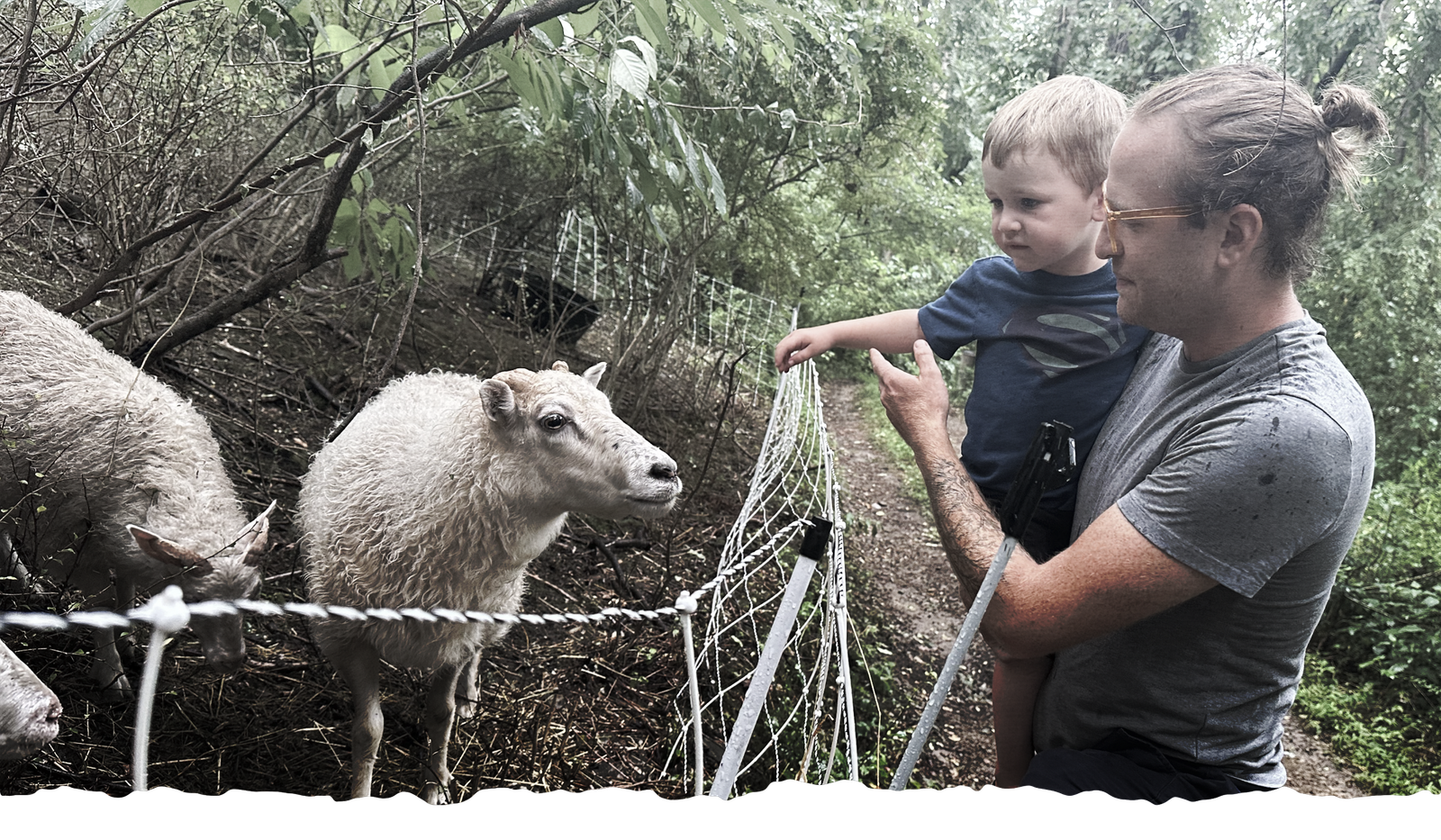
Sheep, bees, chickens, and wild creatures do more than inhabit this place. Each brings an instinctive intelligence to the work of shaping it.
FIELD NOTE / HUSBANDRY
Animals change a place.
They graze and browse. They pollinate. They fertilize, scratch, disturb, trample, carry seed, make paths, and alter what grows next.
Their presence becomes part of the history of the land. Husbandry, then, is not only the care of animals. It is also the practice of tending the relationships animals create around them.
The farm is not merely occupied by animals. It is partly written by them.
grazing / browsing / paths / fertility / food / fiber
THE FARM ORGANISM
The idea of a farm without animals should unsettle us.
It should feel as unsettling as the idea of a world without humans. We are all participants in nature, and each life brings something to the work of shaping a place.
Make no mistake: no farm is actually without animals. They may be hidden in the soil or moving along its margins. They may be sickened by chemicals, displaced by simplification, or destroyed seasonally by large machinery. But even where we imagine there are none, there are many.
Animals contribute through an embodied, instinctive intelligence: what to eat, where to travel, where to rest, and where to return fertility. Their purposes do not always coincide with ours. Co-working begins in that tension—not by denying their agency, but by bringing it into relationship with what the land and farm require.
Participation does not require agreement. It requires relationship.
THREE ANIMAL RELATIONSHIPS
Sheep
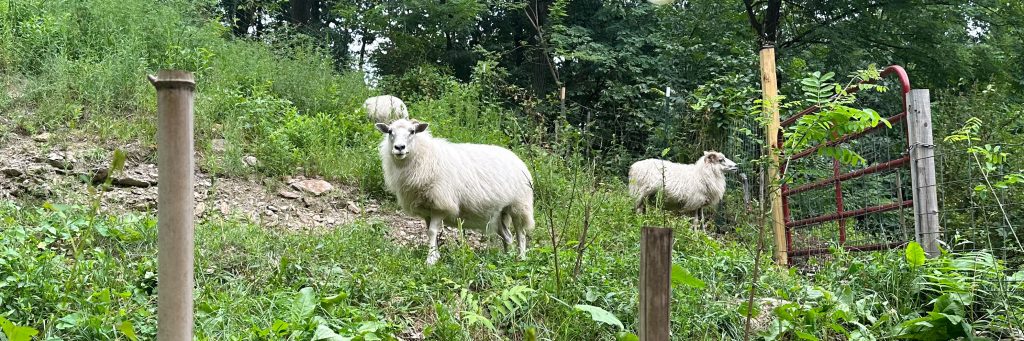
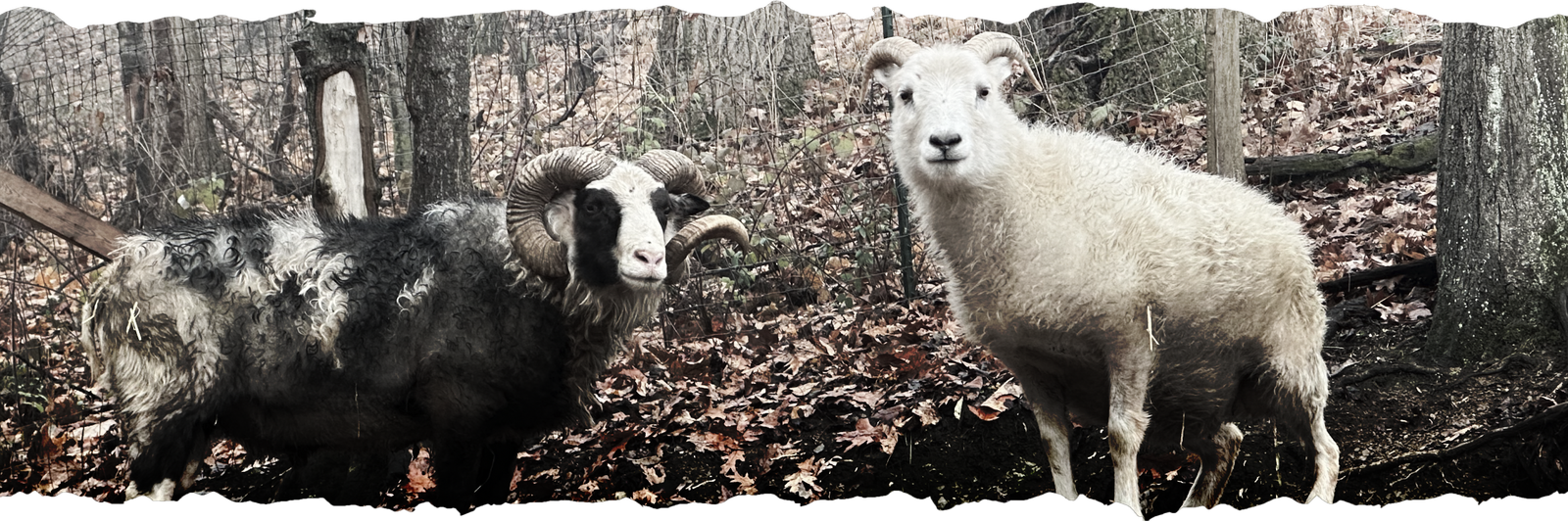
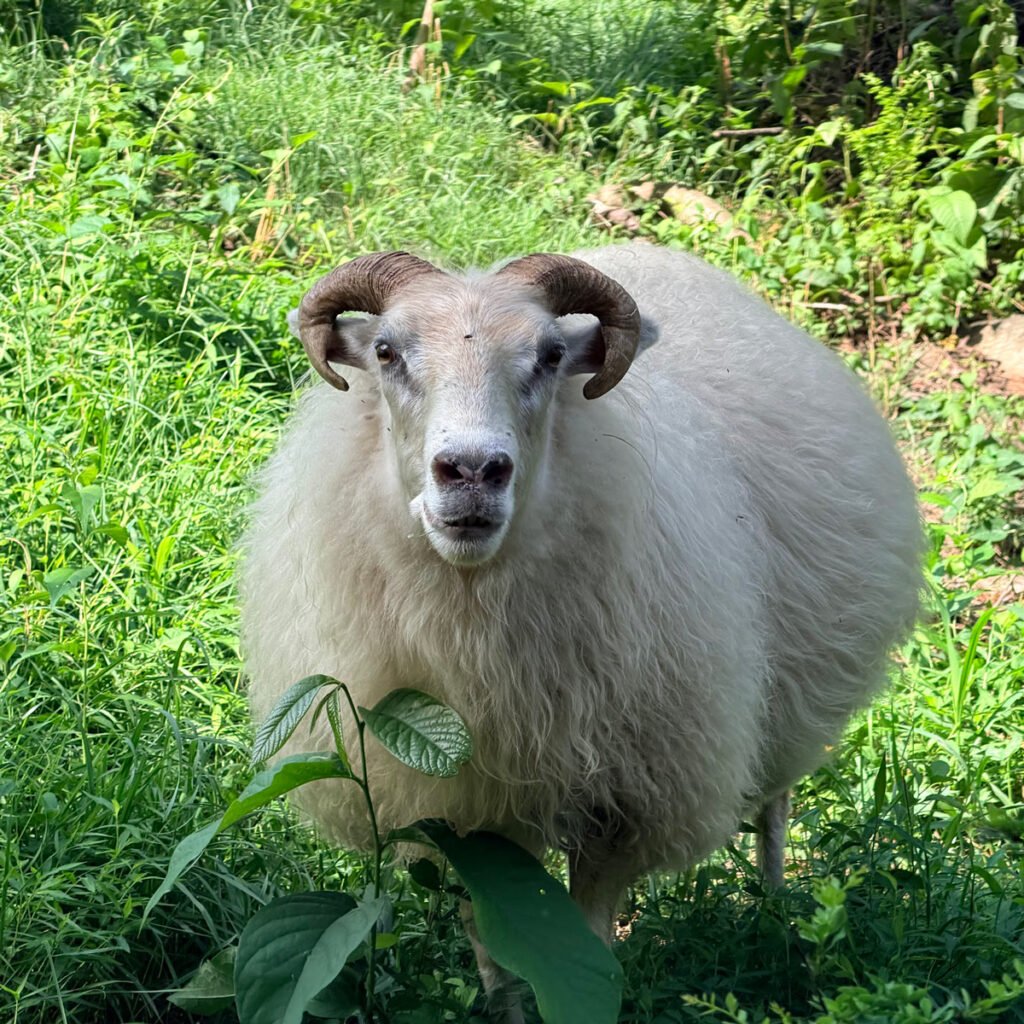
Icelandic sheep are hardy heritage land managers, well suited to moving through pasture, silvopasture, and woodland. They browse brambles, open paths, cycle fertility, and replace much of the mowing and chemical brush control that the land might otherwise require.
Their work turns vegetation into wool and food while continually changing the conditions for what can grow next.
Bees
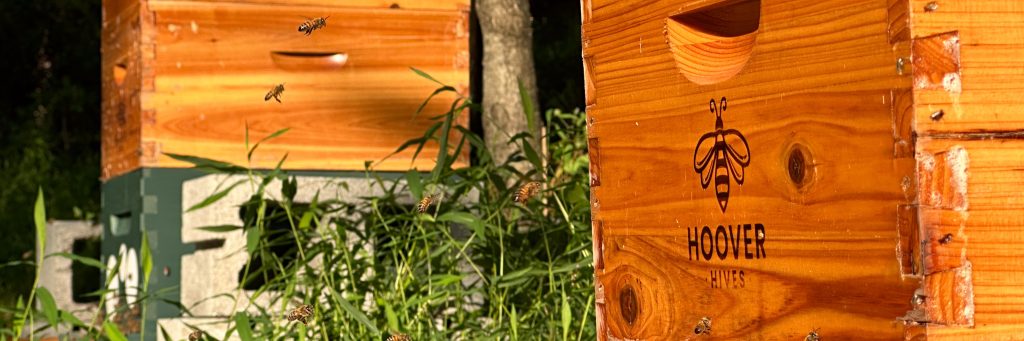
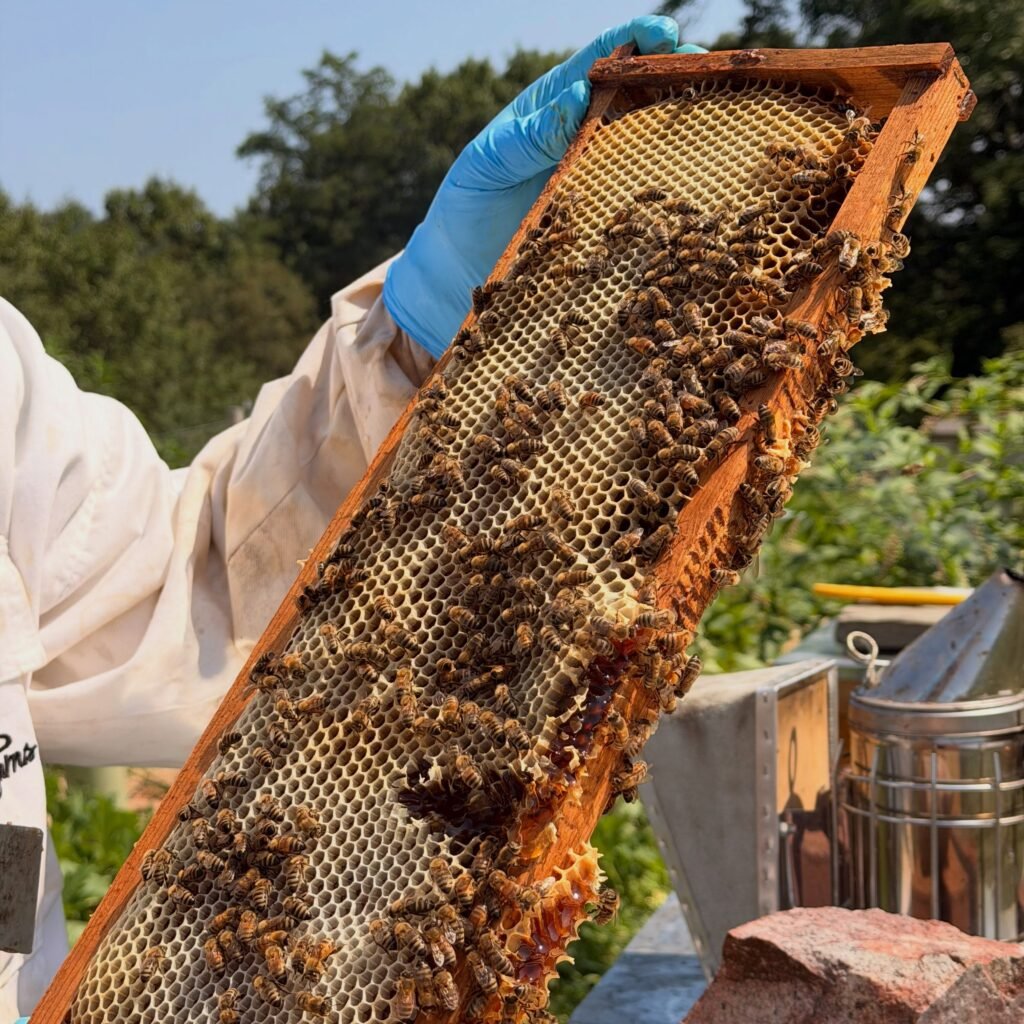
Honeybees are bringers of love and fertility, connecting the farm to flowering plants far beyond a fence line. Their work makes the apiary inseparable from bloom times, weather, orchard, forest edge, and the wider landscape.
We tend them biodynamically and without chemicals, entering the hives only when necessary. These are seasoned, locally adapted colonies whose generations have lived in this region for many years.
Chickens
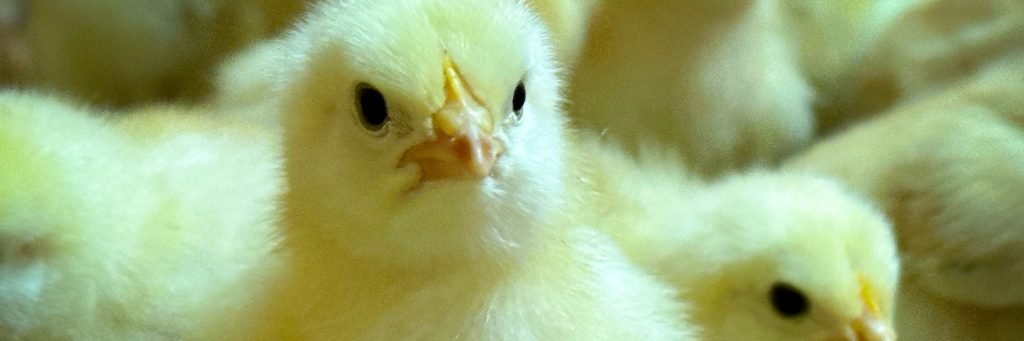
Meat chickens bring another rhythm: feed, movement, scratching, bedding, manure, daily care, and eventually food. They are raised for the farm rather than as a current retail product.
THE FLOCK AND THE FOREST
The sheep helped choose what grew next.
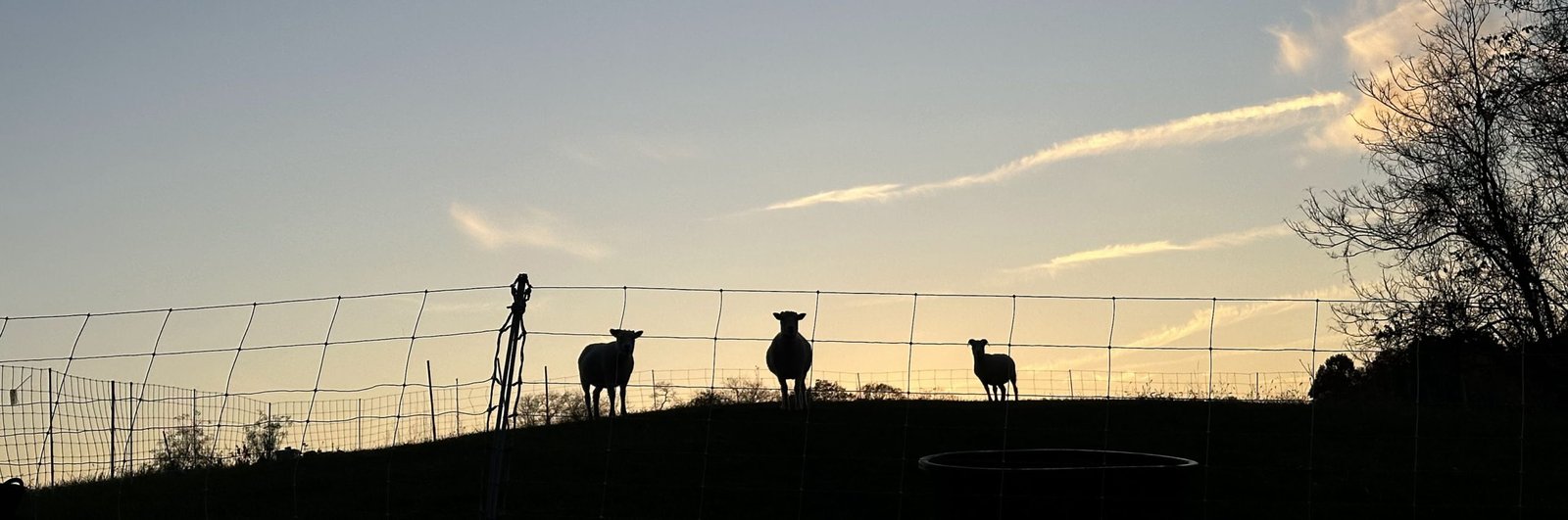
Intensive rotational grazing and lightweight mobile fencing allow us to direct the flock without reducing the sheep to machinery. We choose the temporary boundary; within it, they bring their own intelligence to what they browse, avoid, trample, open, and fertilize.
Emergent Silvopasture
One wooded pasture was previously covered in vines and brambles. Working through it over time, the Icelandic sheep opened paths, reduced unwanted growth, and created space for another plant community to emerge. Nine native, shade-loving forbs now grow between trees selected through the combined activity of farmers and flock.
Our sheep help us limit multiflora rose and Oriental bittersweet without treating eradication as the only possible relationship.
Planned Silvopasture
In the upper pasture, the collaboration is more deliberately designed. Pollarded honey locust, mulberry, sumac, spicebush, and other woody plants are being established as forage, shade, and structure. Young honey locusts have been grafted with cultivars developed through the breeding work of Pennsylvania tree-crop pioneer John Hershey, who also contributed articles to the early American biodynamic movement.
As these trees mature, pollarding will provide winter “tree hay” for our small flock, while the honey locusts will drop sweet, nutritious pods during their natural season. The system asks trees to feed sheep, sheep to feed soil, and farmers to tend the timing and relationships between them.
One pasture emerged through observation. The other is being designed. Both ask what sheep, trees, and farmers can make together.
FIELD NOTE / MOVEMENT
Move them before the ground asks twice.
Rotational grazing is an act of timing. Our practice draws from an insight central to Allan Savory’s work: grazing animals can be gathered, moved, and rested in ways that echo the activity of natural herds. The flock enters briefly, concentrating its grazing, browsing, trampling, and fertility before moving onward.
Recovery is part of the purpose. Plants rebuild leaf and root, photosynthesis draws carbon from the atmosphere, and root exudates and decomposing organic matter feed life belowground. Managed well, grazing can help sink carbon into living soil while improving groundcover, water infiltration, and resilience.
The fence is not the system. It is a temporary line within a larger relationship between appetite, vegetation, weather, soil, recovery, and the farmer’s attention.
Graze. Move. Rest. Return.
THE LAND REMEMBERS
Grazing is a form of writing.
A sheep path, a browsed shrub, a patch of scratched earth, manure returned to the soil, a flower pollinated: animals leave traces that shape what happens next.
The question is not whether animals alter the land. It is what kind of landscape the relationship makes possible.
THE WILD PARTICIPANTS
The farm is shaped beyond our intentions.
Biodiversity is among the clearest indicators of ecological health, but it is also the foundation of ecological resilience. Extreme weather, predation, disease, and other forces can rapidly transform a manicured monocrop landscape. A diverse living system holds more possible responses. When one species, food source, shelter, or relationship is disrupted, others may continue the work.
Foxes, deer, hawks, owls, snakes, turtles, rodents, woodpeckers, and countless less-visible animals also shape Dark Hollow. They browse, hunt, scatter seed, excavate soil, open cavities, regulate populations, and create habitat for lives that follow.
Their activity contributes to the land even when it conflicts with our wishes. A fox may take a chicken. A deer may browse a young tree. A rodent may consume something we hoped to harvest. These encounters are not evidence that an animal has failed to understand the farm. They reveal that other lives have purposes of their own.
Eradication is both futile and wrong. We work instead toward balance by changing what we can readily control: protecting young trees, securing chickens, adjusting timing and boundaries, and encouraging the relationships that keep populations in motion.
Wildness is not a failure of management. It is a living reserve of relationships through which the farm can adapt.
Goods Library / animal agriculture
From This Practice
A changing selection from the Goods Library.

FROM THE MARGIN
Husbandry begins with attention.
To keep animals is to enter a daily relationship with lives that have needs, habits, preferences, and effects of their own. Good husbandry asks what they require, what they give, and what the land becomes through their presence.