A PLACE OF PRACTICE & INQUIRY
About Dark Hollow Biodynamic
A small farmstead, a living landscape, and a place to ask better questions.
THE PEOPLE & THE PLACE
A family learning one particular piece of land.
Dark Hollow Biodynamic is the home of Allen and Kerry Clements and their family, and a 13-acre farmstead taking shape around the life they are making here.
The family came to this hollow above the Susquehanna River in 2021. Since then, the woods, slopes, water, animals, and changing seasons have steadily altered what they thought the place might become.
Dark Hollow Biodynamic is a home before it is anything else. The farm grows from daily life rather than sitting apart from it: meals and weather, children and animals, successes, failures, making, teaching, and the repeated work of caring for what is close at hand.
THE PLACE
The land sets the terms.
Rather than clearing the woods and flattening the questions, the work begins with what is already here: forest, slopes, water, native plants, wildlife, and the limits of the place itself.
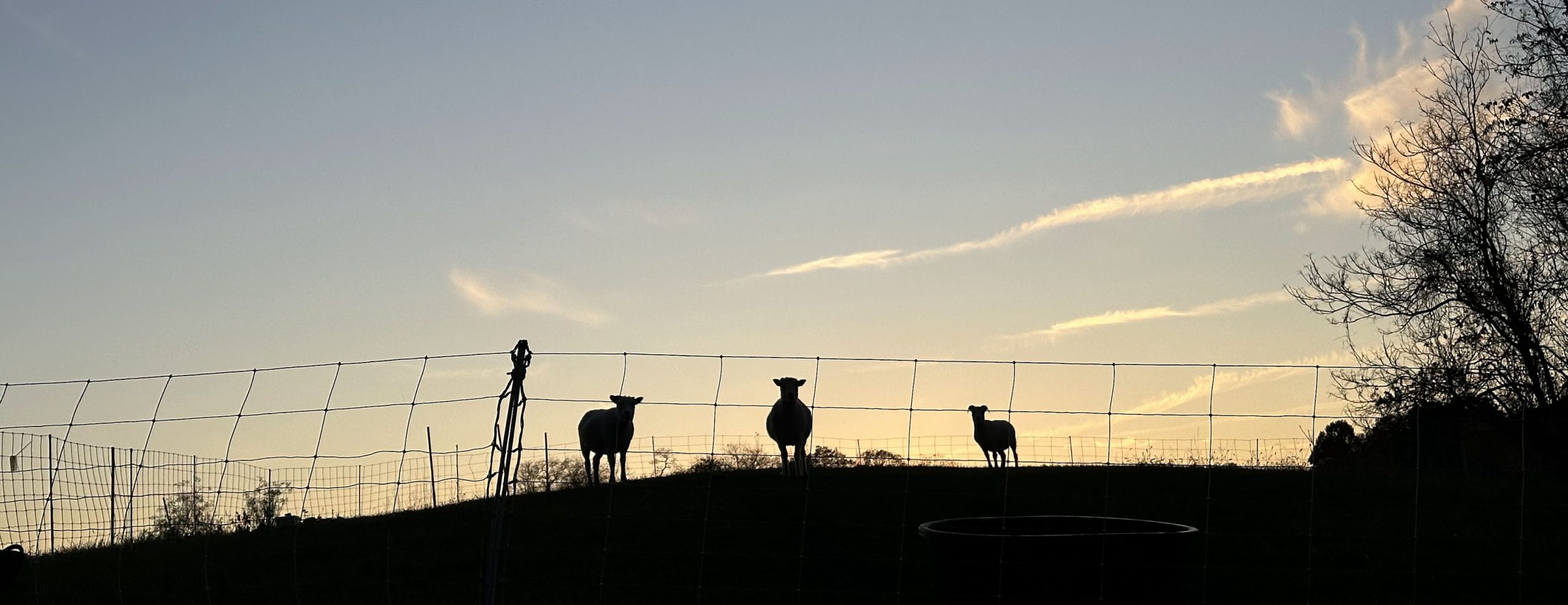
Sheep move beneath trees. Medicinal plants grow under a standing canopy. Native foods become crops. Bees connect the farm to a landscape much larger than its boundaries. Water is slowed and invited into the soil rather than hurried downhill.
Dark Hollow Biodynamic is not organized around forcing every acre into production. It is an attempt to discover what kinds of abundance this particular place can hold without becoming less itself.
HOW THE PATH GOT HERE
The farm was not a finished idea waiting to be built.
The path to Dark Hollow Biodynamic passed through gardens in other landscapes, filmmaking and writing, education, Waldorf practice, fiber and handwork, animals, ecology, and years of questions about how human life might belong more fully within the living world. Here, those interests began meeting one another on the ground.
Begin with attention.
The first task was learning the hollow: where water moved, what returned on its own, how the woods changed through the year, and what the land resisted.
Work with what is here.
Beginning in 2022, native pasture, perennial trees, riparian plantings, check dams, sheep, bees, and woodland crops gradually became parts of one living pattern.
Let the place answer back.
The work remains provisional. Practices are tried, observed, revised, and sometimes abandoned. What matters is staying in relationship long enough to notice consequences.
TWO WAYS OF TENDING
Different interests, shared ground.
Allen and Kerry bring different interests to Dark Hollow Biodynamic. Their ways of seeing overlap without becoming identical, and the farmstead is richer for the conversation between them.
ALLEN CLEMENTS
Co-Creative Producer
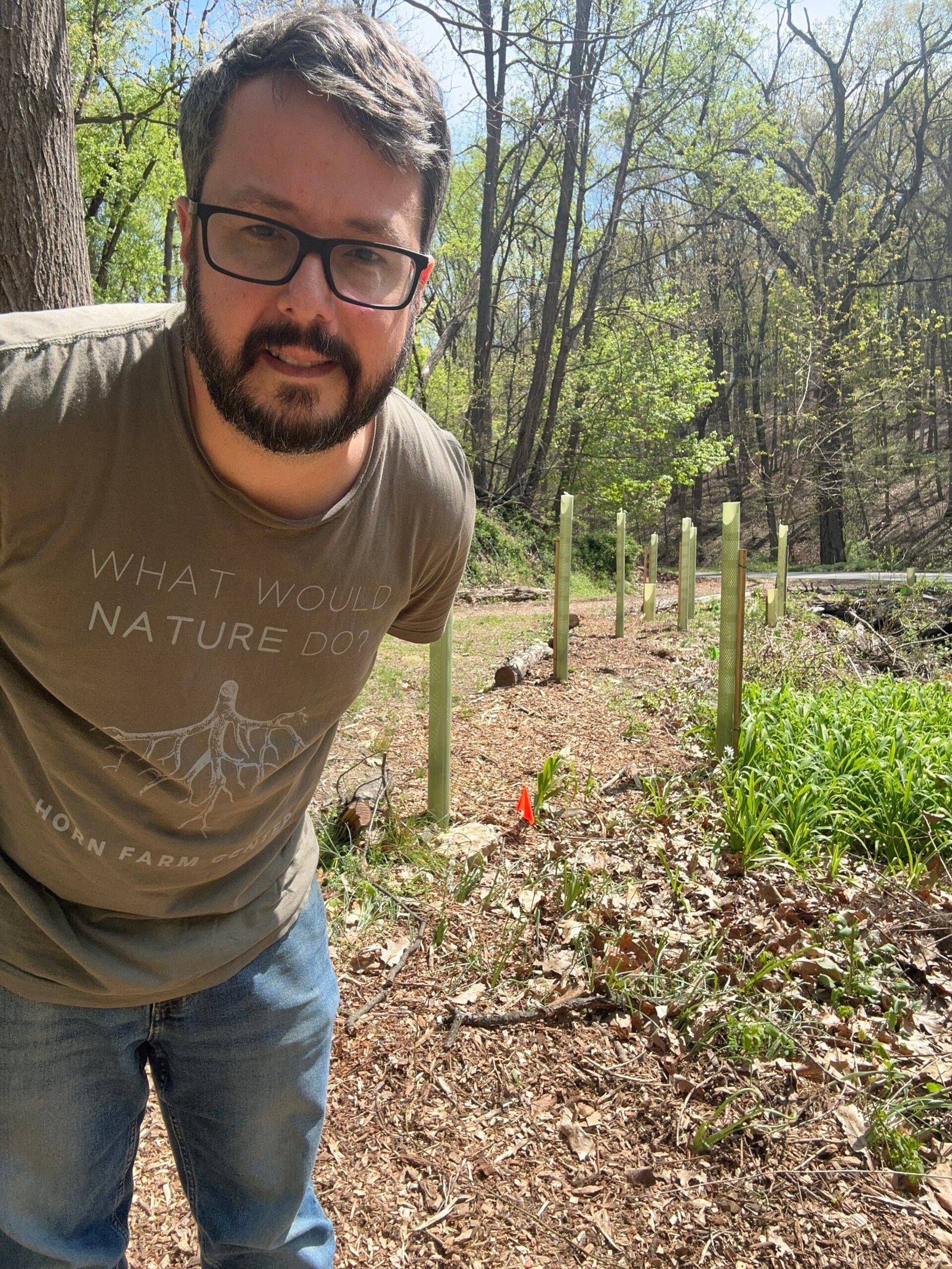
Allen’s work centers on biodynamics, agroforestry, perennial agriculture, woodland medicinals, native foods and spices, animals, and the ongoing task of understanding and caring for the land.
He is also a filmmaker, writer, educator, and public speaker. Increasingly, those pursuits have become difficult to separate from the farm. Each is a way of asking how we see, what we value, and what it means to participate in a living world.
Speaking & booking →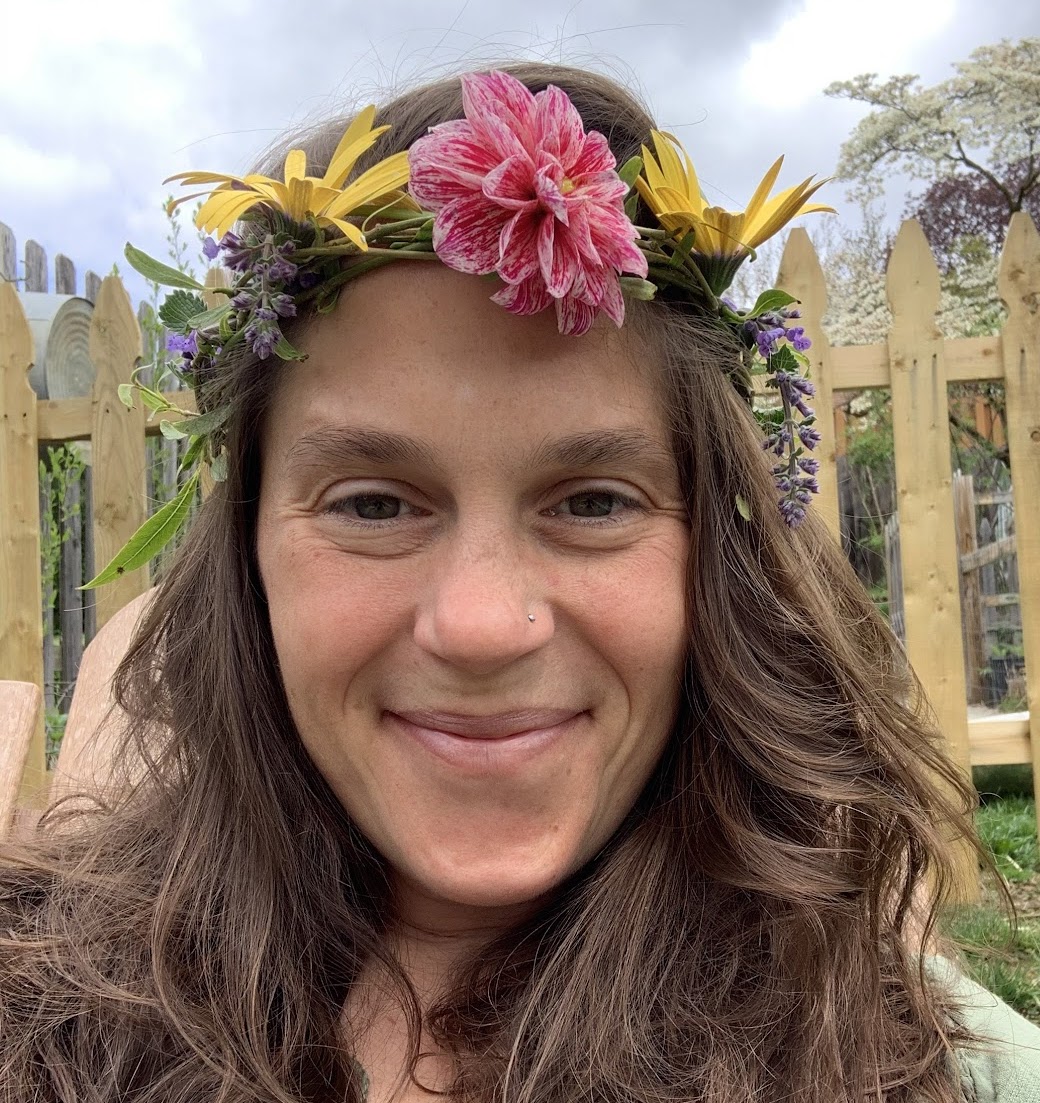
KERRY CLEMENTS
Children, animals & making
Kerry is a Waldorf early-childhood educator and fiber artist whose work is rooted in child development, imagination, handwork, and the relationship between children and the natural world.
At Dark Hollow Biodynamic, that attention is visible where care and making meet: in animals known as individuals, wool moving from fleece toward something made by hand, and the rhythms through which a home remains connected to the living world around it.
Meet the sheep & their wool →WHAT INFORMS THE WORK
Roots, not a closed system.
Biodynamics and Anthroposophy are important roots of Dark Hollow Biodynamic, expressed through agriculture, education, observation, and an understanding of the farm as a living whole. They stand alongside ecology, craft, practical experience, and the willingness to question inherited ideas.
The useful question is not simply what a tradition says. It is what can be practiced, observed, understood, tested, and carried forward on an actual piece of land.
NOT A MODEL. A PRACTICE.
One small place where ideas can have consequences.
Dark Hollow Biodynamic is not an institute, a commercial demonstration farm, or a claim to have solved how people should live with nature. Things can grow here. Things can fail. The land can answer back.
The work is to keep paying attention.
A FEW QUESTIONS, ANSWERED
What is Dark Hollow Biodynamic?
Dark Hollow Biodynamic is a 13-acre home-scale biodynamic and agroforestry farmstead in the hills above the Susquehanna River near Wrightsville, Pennsylvania. It is a place where farming, ecology, animals, craft, natural philosophy, and practical experimentation meet in the ongoing work of learning how to care for a particular place.
Who are the people behind Dark Hollow Biodynamic?
Dark Hollow Biodynamic is the home of Allen and Kerry Clements and their family. Allen’s work centers on biodynamics, agroforestry, perennial agriculture, woodland medicinals, native foods and spices, animals, filmmaking, writing, and education. Kerry is a Waldorf early-childhood educator and fiber artist whose work is rooted in child development, imagination, handwork, animals, wool, and the natural world. Their interests are different but interrelated, and together they shape the life of Dark Hollow Biodynamic.
What does Anthroposophy have to do with Dark Hollow Biodynamic?
Anthroposophy is one of the philosophical roots that informs life at Dark Hollow Biodynamic, expressed through biodynamic agriculture and Waldorf education. Dark Hollow Biodynamic is not an Anthroposophical institution; it is a family farmstead where those traditions are explored alongside ecology, agriculture, art, observation, experimentation, and practical experience.
Where is Dark Hollow Biodynamic located?
Dark Hollow Biodynamic is near Wrightsville in south-central Pennsylvania, in the hills above the Susquehanna River. It is a home and farmstead rather than a continuously open public attraction. The best opportunities to visit are through scheduled workshops, tours, gatherings, and other events listed on our Participate page.