
Plantain
Plantago spp.
Field Notes
This is not the tropical plantain, the starchy, banana-like fruit. Longleaf plantain and common plantain are low-growing leafy plants often found in lawns, paths, pastures, and other well-traveled places.
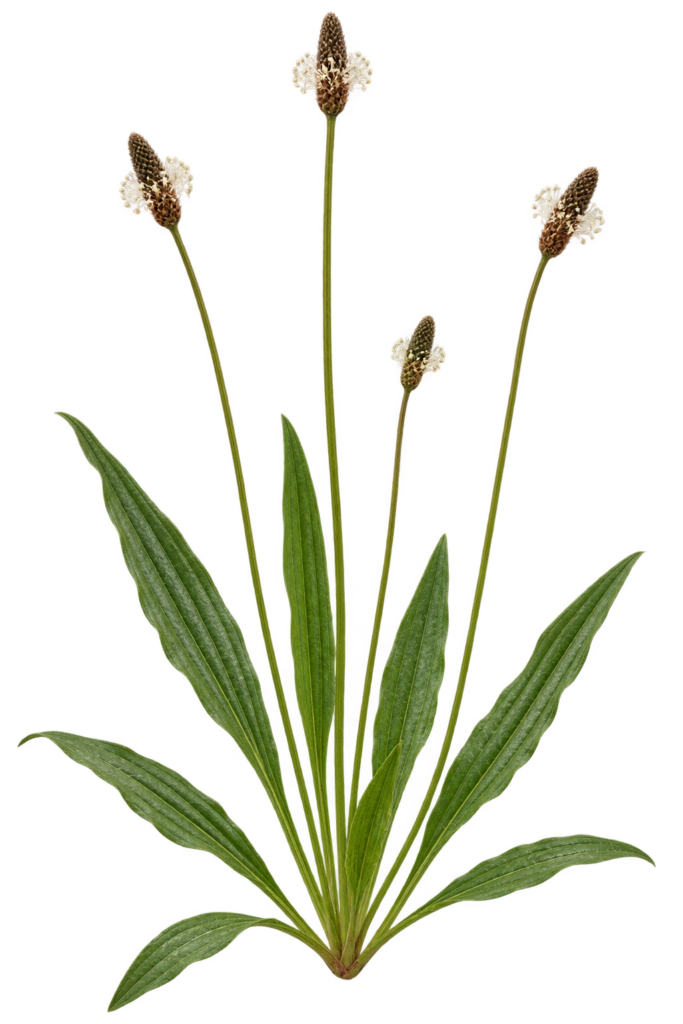
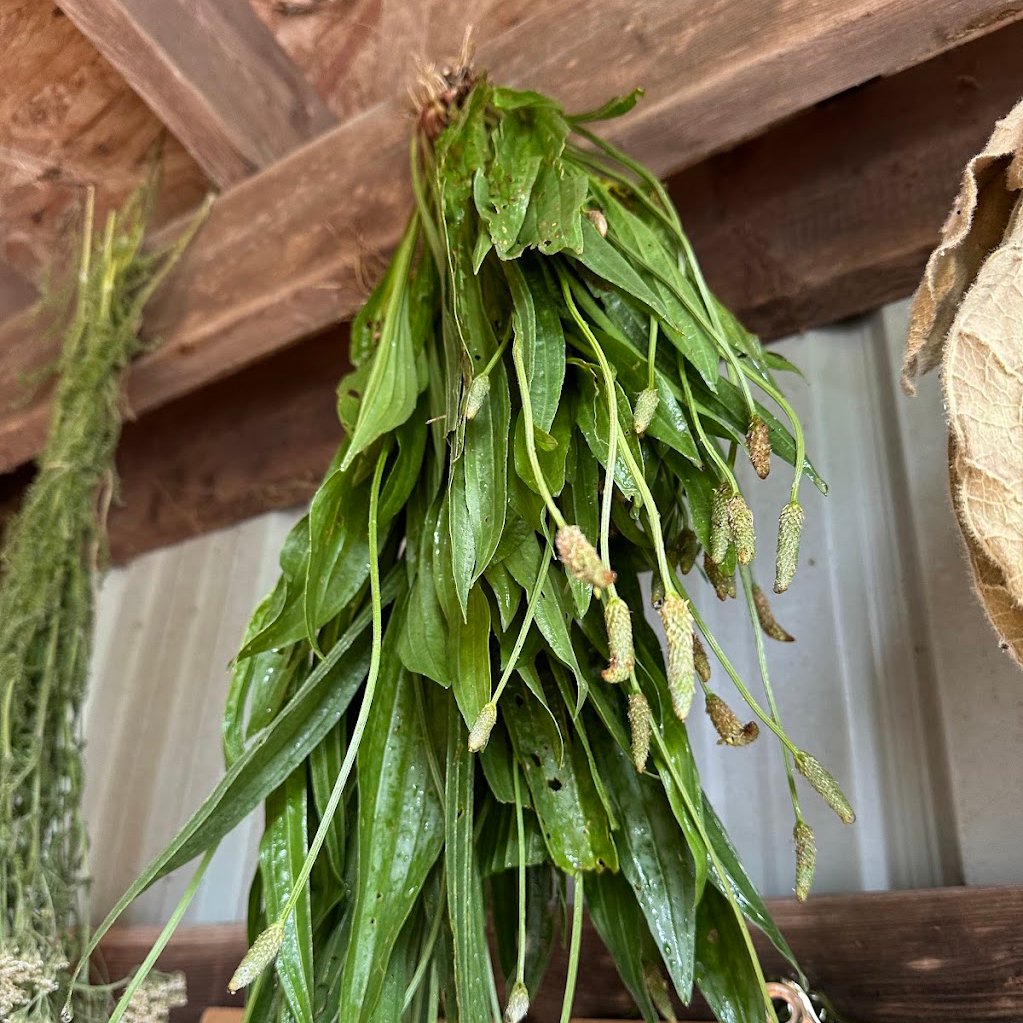
Common plantain has broad, rounded leaves, while longleaf plantain has narrow, strongly ribbed leaves. Both are edible. The young leaves are tender enough for salads, while older leaves can be cooked like greens or added to soups. Their mature seeds are edible as well.
The leaves provide fiber, calcium, iron, and vitamins A, C, and K, though they become increasingly fibrous with age. For the best eating, choose the youngest leaves from the center of the rosette.
Plantain also has a long history in traditional herbal practice. Fresh leaves have been crushed and placed directly on minor bites, stings, scrapes, and irritated skin. Teas and syrups made from the leaves were traditionally used to soothe coughs and the digestive tract.
Common plantain and longleaf plantain differ in form, but both carry the same quiet usefulness. They are humble, resilient plants that offer food and traditional remedies almost anywhere people have made a home.
What It Yields
This Good can remain in the library without a product or harvest attached to it.
Goods Library Inquiry
Ask about availability
An estimate is fine. This is not a reservation or commitment to purchase.