
Multiflora Rose
Rosa multiflora Thunb.
Field Notes
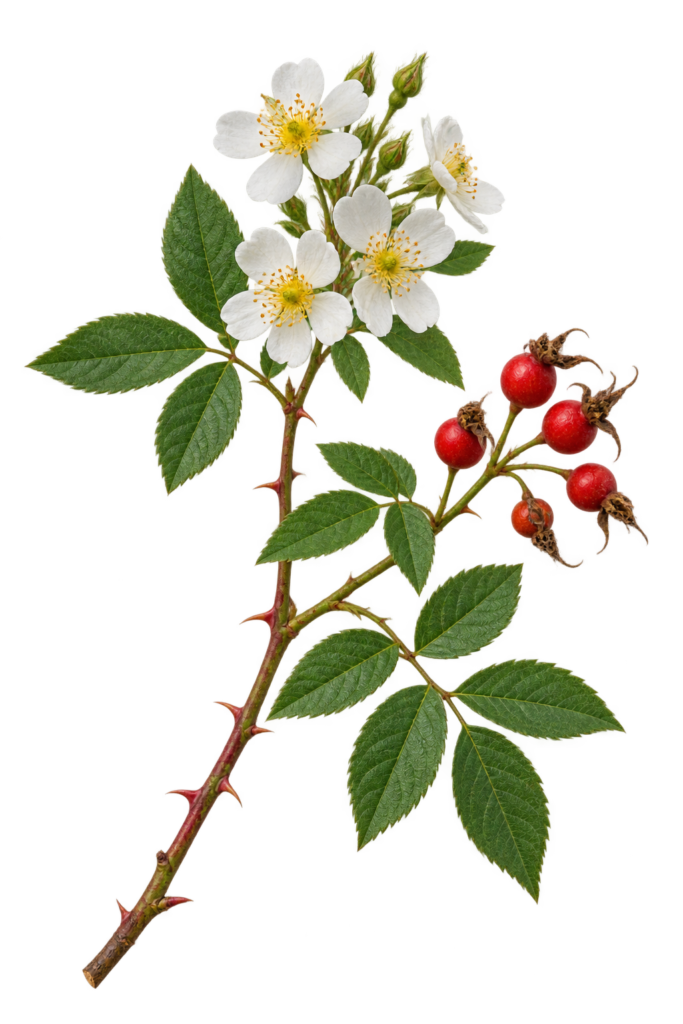
Multiflora rose was brought to the United States from East Asia in the 1800s, first as rootstock for cultivated roses and later promoted for erosion control, living fences, wildlife habitat, and roadside plantings. It spread readily beyond those intended uses and is now widely treated as an invasive species. Yet its presence on the land is not without relationship or function.
Its dense, thorny thickets create safe harbor for rabbits, birds, and other small animals, while offering nesting places and protection from larger predators. Deer also use it for cover and browse. In autumn, its clusters of small red rose hips provide food for wildlife and can be gathered for human use. The hips are rich in vitamin C and antioxidants and may be dried for tea, infused into syrups, or prepared as jelly. As with other roses, the inner seeds and fine hairs should be strained out during preparation.
What It Yields
This Good can remain in the library without a product or harvest attached to it.
Goods Library Inquiry
Ask about availability
An estimate is fine. This is not a reservation or commitment to purchase.