
Barberry
Berberis spp.
Field Notes
Shrub · Hedgerow · Woodland Edge
spring-fall
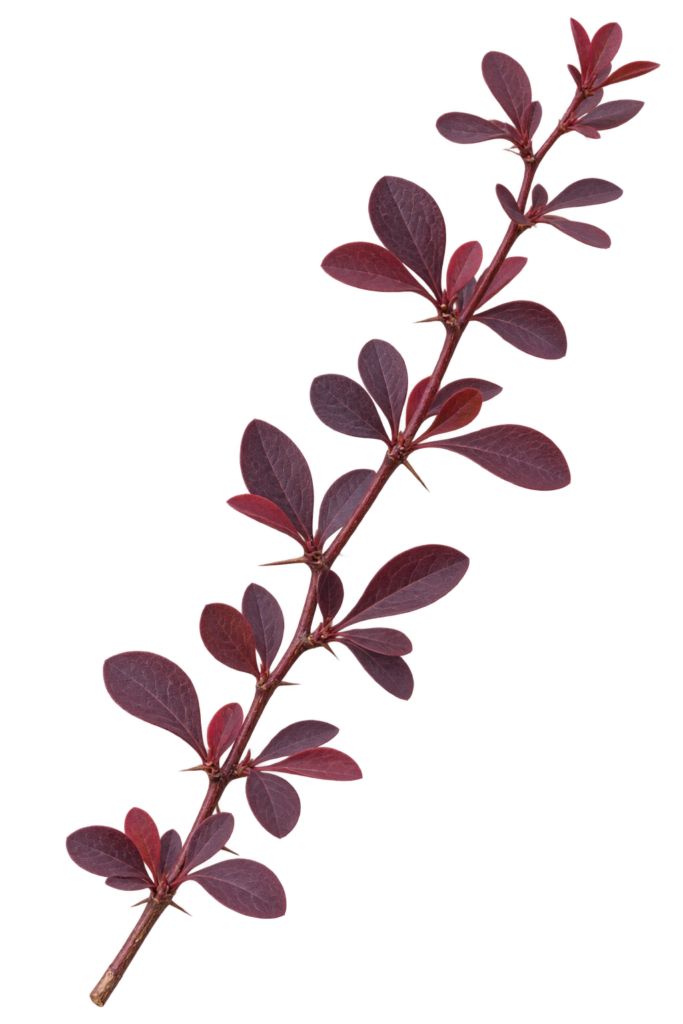
Japanese barberry was brought to the United States from East Asia in the late 1800s as an ornamental shrub. Its graceful arching branches, small leaves, colorful foliage, and bright red berries made it popular in gardens and hedges. It was also promoted as a replacement for common barberry, which had become associated with wheat stem rust.
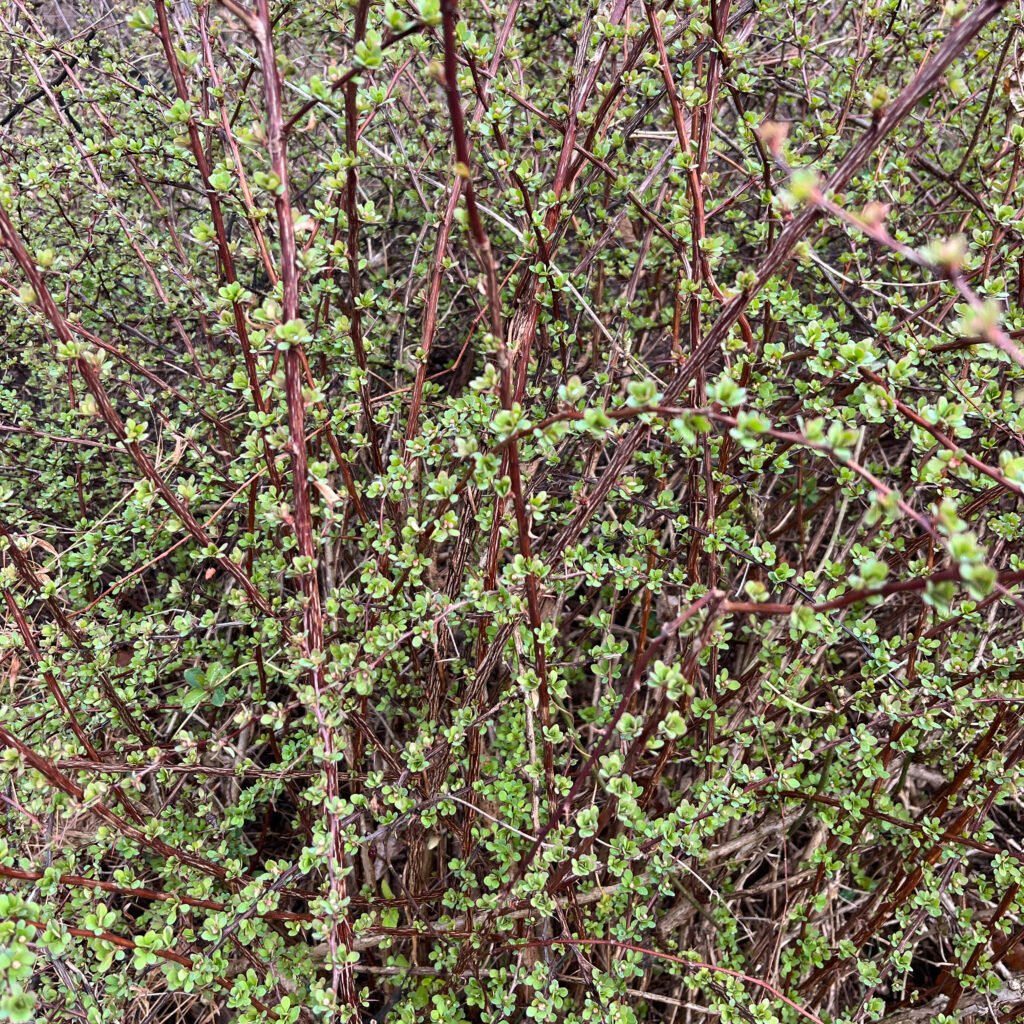
The shrub readily escaped cultivation and is now widespread in forests, field edges, and disturbed ground. Its dense, thorny growth can provide shelter for birds, rabbits, and other small animals, while its persistent berries offer winter forage for birds that also disperse its seeds. Deer usually browse it lightly, which gives barberry an advantage where other woodland plants are eaten heavily.
Its roots and bark contain berberine, a vivid yellow compound with a long history of traditional use among several related barberry species. Animals are known to instinctively seek particular plants for medicine, moving among barberry and numerous other species according to needs we may not readily perceive.
It is easy to see Japanese barberry only as a problem to remove. A closer look reveals a plant responding remarkably well to disturbed landscapes, filling open ground with thorny protection, persistent color, and cover while also reshaping the woodland community around it.
What It Yields
Dried Barberry Root
Root · Dried
Available by request
Fresh Barberry Root
Root · Fresh
Available by request
Goods Library Inquiry
Ask about availability
An estimate is fine. This is not a reservation or commitment to purchase.